
What is Blogging?
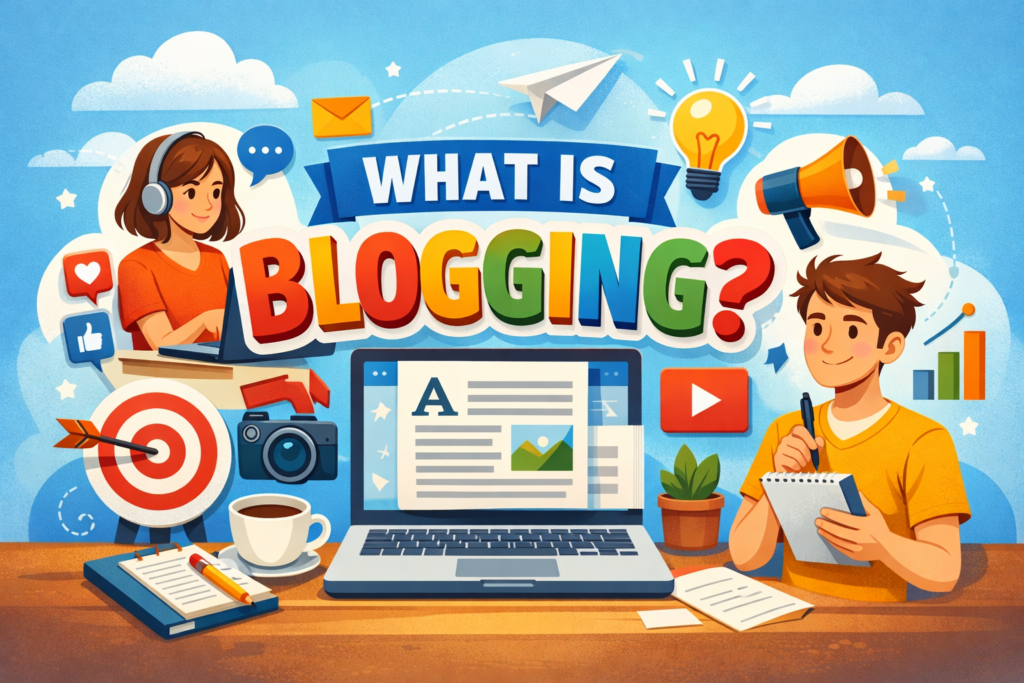
Blogging is one of the most powerful ways to share knowledge, build an audience, and even earn a full-time income in 2026. Whether you’re a student, professional, entrepreneur, or hobbyist, understanding blogging can open doors you never knew existed.
This guide explains exactly what blogging is, how it works today, why millions do it, and how you can start your own successful blog — even if you’ve never written online before.
What Exactly is a Blog?
A blog (short for “weblog”) is a regularly updated website or web page written in an informal, conversational style. Unlike traditional websites, blogs are dynamic — new content is added frequently, usually in reverse chronological order (newest posts appear first).
Modern blogs cover every topic imaginable:
- Personal experiences (lifestyle, travel diaries)
- Professional expertise (marketing, coding, finance)
- Hobbies (cooking, fitness, gaming)
- Reviews (tech, books, movies)
- News & opinion (politics, culture, sports)
In 2026, a blog is no longer just text. It includes images, videos, podcasts, newsletters, and interactive elements — making it a complete digital media platform.
The Evolution of Blogging: 1994 to 2025
- 1994: Justin Hall creates the first blog-like site
- 1999: Blogger.com launches — blogging becomes easy for non-coders
- 2003: WordPress is released (now powers 43% of all websites)
- 2005–2010: Blogging explodes with food, fashion, and mommy blogs
- 2010–2015: Rise of professional bloggers earning six figures
- 2016–2020: Video and social media challenge traditional blogs
- 2021–2025: Blogs evolve into full media businesses with newsletters, courses, memberships, and communities
Today, blogging is stronger than ever because search engines and readers still prefer in-depth, trustworthy written content over short social media posts.
Different Types of Blogs in 2025
1. Personal Blogs
Diary-style sites about life, thoughts, and experiences.
2. Niche Blogs
Deep focus on one topic (e.g., “Android customization”, “vegan keto recipes”, “German shepherd training”).
3. Professional/Authority Blogs
Used by experts to establish thought leadership (e.g., Neil Patel, Seth Godin).
4. Business/Corporate Blogs
Company blogs that drive traffic, leads, and sales (e.g., HubSpot, Shopify).
5. Affiliate Blogs
Earn commissions by recommending products (common in tech, beauty, finance).
6. Review Blogs
In-depth product or service reviews (wirecutter.com model).
7. News & Commentary Blogs
Fast updates and opinions (e.g., TechCrunch, The Verge).
8. Multimedia Blogs
Heavy use of video, audio, and visuals (YouTube companion blogs, podcast show notes).
Why Do People Blog in 2025?
Real reasons (not just “to make money”):
- Share knowledge and help others
- Build personal brand and authority
- Grow a business or freelance career
- Document life and experiences
- Connect with like-minded people
- Earn passive income
- Land better jobs (recruiters Google candidates)
- Influence culture or policy
- Creative expression
- Mental clarity through writing
How Blogs Make Money in 2026 (Real Numbers)
Successful bloggers use multiple income streams:
| Income Source | Average Earnings (per month) | Difficulty |
|---|---|---|
| Display Ads (AdSense, Ezoic, Raptive) | $1,000 – $25,000+ | Easy |
| Affiliate Marketing | $500 – $100,000+ | Medium |
| Digital Products (eBooks, courses) | $2,000 – $200,000+ | Hard |
| Sponsored Posts | $300 – $15,000 per post | Medium |
| Memberships/Subscriptions | $1,000 – $50,000+ | Hard |
| Consulting/Coaching | $5,000 – $100,000+ | Hard |
| Physical Products | Highly variable | Hard |
Example: A mid-level niche blog with 100,000 monthly visitors can realistically earn $5,000–$15,000/month in 2026.
Key Elements of a Successful Blog
1. Niche Selection
Choose a topic you can write about for years. Profitable niches in 2025:
- Personal finance & investing
- Health & fitness (especially women 35+)
- Parenting (newborns, teens, special needs)
- Technology & software
- Home improvement & DIY
- Career advice & remote work
- Sustainable living
2. Domain & Hosting
- Buy a .com domain ($10–15/year)
- Use reliable hosting (SiteGround, Cloudways, WPX)
3. Platform Choice
- WordPress.org (best for control & growth)
- Medium (great for reach, limited control)
- Substack (best for paid newsletters)
- Ghost (clean, modern, great for writers)
- Wix/Squarespace (easy but limited SEO)
4. Design & User Experience
Clean, fast-loading, mobile-friendly design is non-negotiable.
5. Content Strategy
- Publish consistently (1–4 times/week)
- Write in-depth guides (2000+ words)
- Answer real questions people search
- Use proper headings, images, and formatting
6. SEO (Search Engine Optimization)
The #1 traffic source for most blogs. Key 2026 SEO factors:
- High-quality, helpful content
- Fast website speed
- Mobile optimization
- Proper keyword research.
- Internal & external linking
- E-E-A-T (Experience, Expertise, Authoritativeness, Trustworthiness)
7. Email List
The most valuable asset. Start collecting emails from day one.
Step-by-Step: How to Start a Blog in 2025
- Choose your niche
- Pick a domain name
- Get hosting + install WordPress
- Choose a clean theme (Astra, GeneratePress, Kadence)
- Install essential plugins:
- Rank Math or Yoast (SEO)
- WP Rocket (speed)
- Smush (image optimization)
- UpdraftPlus (backups)
- Write your first 10 posts
- Set up Google Analytics & Search Console
- Start building an email list
- Promote on Pinterest, Reddit, Quora, or niche communities
- Be consistent for 6–18 months
Common Blogging Myths vs Reality (2026)
| Myth | Reality 2026 |
|---|---|
| “Blogging is dead” | Stronger than ever — Google loves blogs |
| “You need to post daily” | Quality > quantity. 1 great post/week is enough |
| “Anyone can make money fast” | Takes 6–24 months of consistent work |
| “You need to be a great writer” | Clarity and helpfulness matter more than style |
| “Social media is enough” | Blogs + email = real business ownership |
The Future of Blogging (2026–2030)
- AI-assisted writing (tools like Jasper, Claude) will speed up creation
- Voice search optimization will grow
- Video + text hybrid posts will dominate
- Paid newsletters and memberships will explode
- Community-driven blogs (Discord, Circle) will rise
- Google will reward expertise and personal experience more
But one thing won’t change: people will always search for answers, and blogs that provide the best answers will win.
Final Thoughts: Should You Start a Blog in 2025?
Yes — if:
- You enjoy teaching or sharing
- You’re willing to write consistently
- You want full control over your online presence
- You’re patient (success is rarely overnight)
No — if:
- You want fast money
- You hate writing or learning SEO
- You give up easily
Blogging in 2026 is not about “getting rich quick.” It’s about building a real digital asset that grows over time — one that can change your career, income, and life.
Start small. Write your first post this week. The hardest part is beginning.
[…] you want to start a blog, promote your business, or share your ideas with the world, you have to have online presence on […]